
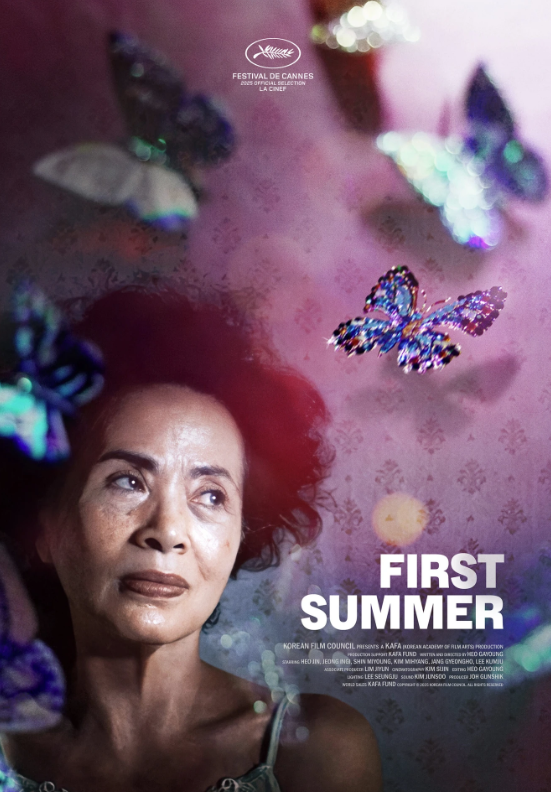
I first met Heo Gayoung in 2021 in a student dorm when she was studying business at the prestigious Yonsei University, but her dream was to become a movie director. If she had never touched a camera back then, Heo Gayoung’s latest movie First Summer is already nominated in the La Cinef selection at the 78th Festival de Cannes in 2025. Presided this year by Maren Ade, La Cinef awards short- and medium-length movies from student directors.
First Summer depicts the inner conflict of Yeongsun, a 74-years old Korean woman who chooses to attend her deceased boyfriend’s memorial service rather than her granddaughter’s wedding.
A week away from the festival, Heo Gayoung walks us through the meaning behind First Summer, the hardships of moviemaking, and the secret life of elders.
Gayoung, you’re in the news a lot in South Korea lately, but thank you for giving me your first in-depth interview about First Summer, and yourself as a movie director. Are you nervous about going to Cannes next week?
H.G: Yes, I’m nervous, I’m so fucking nervous (laugh). Many people want me to win so I feel so much pressure, it’s like a burden on my mind. You know, in the film industry, directors have to do all the work perfectly. I feel stressed and nervous because I spent so much time preparing for Cannes, it’s the biggest honour.
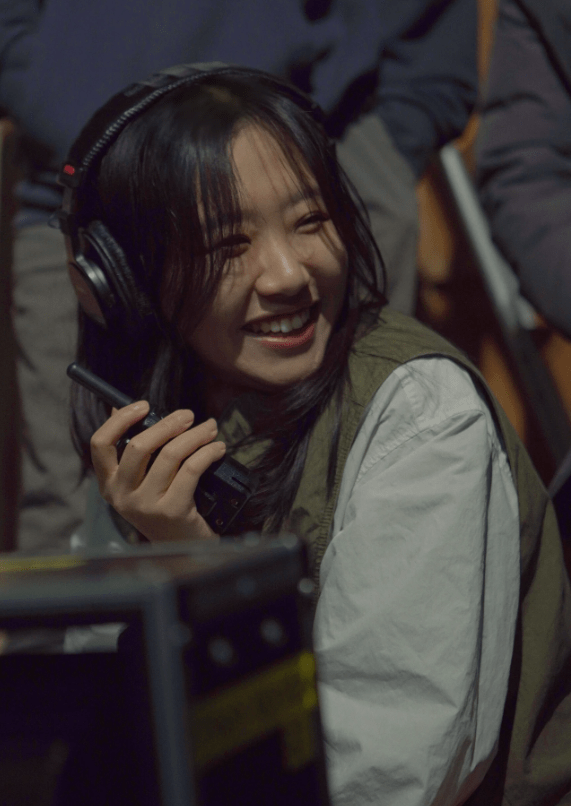
It’s a lot of mixed feelings but it’s very nice to show my film to international people. In the long term my goal is to make many films, I just want to be a director with a long filmography. I just try to trust myself. I know I have to train more so I try to be humble and enjoy myself.
What is First Summer about? Is it true it was inspired by your grandmother?
H.G: First Summer was inspired by my grandmother. I lived with her for six months when I was a teenager and I couldn’t understand her at all. She was very cold, not like other grandmothers. I don’t know how grandmothers behave in other countries, and even in Korea they take care of their granddaughters and try to bond with them, but my grandmother… she didn’t have any interest in me. I felt either sad or curious, asking “why doesn’t she have any connection with her family, she has a lot of relatives?”. Even my mom sometimes felt disappointed, thought she didn’t get much love from her…
Even though we lived together for six months we had no conversations, we were just roommates. Time passed and I grew up, went to University and I took a course on welfare for elderly people. The teacher asked me to give an interview to an elder. I didn’t have many options so I called her and went to visit her again after three years. The first question I asked was “how are you”, and she answered me that she took medicine to sleep better because her boyfriend had not contacted her that day and she was desperate. I was so shocked because I never imagined my grandmother had a boyfriend, and after that we talked for hours.
She talked about how she grew up, and that her passion was to dance in Korean cabarets. My perception was totally flipped. My grandmother was just a woman, a woman chasing her dreams and life but she gave up so many things her whole life. At the end of her life, she found love.
There are a lot of stereotypes on elderly people, because we don’t imagine they can still find love or have sex. After that interview I thought about everyone’s life and how they spend their life in a way they didn’t want. That’s the start of my story. I wrote an essay for school, but at the time I was in my twenties, having fun, and working hard and I forgot her and her story. Later she passed away. It’s still hard to digest what happened and how I forgot her easily.
You know in Korea we have a three-days funerals, and after that you can have a big memorial funeral again 49 days later at the Temple. It’s not a Buddhist tradition it’s more of a Korean tradition. It’s called the 49 days Memorial. We did her’s at a big temple with tables, food and music. Monks played music with drums and that moment inspired me a lot at the time. I listened to the music but it was coming to me like the Cabaret music my grandmother used to dance to, and I saw her in my head dancing at the Temple. I wished that she could have danced as much as she wanted. I decided that I needed to make this image alive in a movie.
So that scene is in your movie?
H.G: Yeah. Spoiler, sorry (laugh). It’s from my imagination but I wanted to see my grandmother dancing in front of me again, even though it’s just in a film.
What is the meaning behind the title?
H.G: “Summer” comes to me very hot, ambitious, and free, I feel it very young with a lot of energy. I always felt my grandmother lost her summers, so I just wanted her first summers back. When I wrote the scenario I thought maybe this story can be the first summer to the main character in the movie.

First Summer directed by HEO Gayoung
You said your grandmother was very cold, distant, and didn’t feel a connection to her family. What do you think she would say or feel knowing that she has inspired a movie that you directed which is now nominated in Cannes, and that her story is going out in the world?
H.G: I imagined a thousand times what she would say if she’d seen the movie. I’m not sure because it will never happen. I didn’t know her much so I cannot say how she would react. I think she would encourage me. When we had the interview, I felt very happy because she loved dancing, music, Cabaret, and she always wanted to borrow musical instruments but she had no money. I thought I found my root. You know I’m artistic and I love expressing myself and I chase things for myself instead of family. I always felt like an outsider in my family. My mom is artistic but no one else. I realized my grandmother was my root and I think she also felt we had a connection.
Is First Summer your grandmother’s story or is it inspired?
H.G: Inspired. The plot… it’s a character movie. I thought my film around the whole character of Yeongsun. She’s a 74-years old woman. The first scene starts with Yeongsun waiting for a call from her boyfriend.
Like your grandmother?
H.G: Yes. And actually the boyfriend passed away. She got the news from her boyfriend’s son Haksu. She missed his official funeral but Haksu invites her to the 49th day memorial, only it’s the same day of Yeongsun granddaughter’s wedding. It’s about inner-conflict. That’s the plot, but the story is about Yeongsun finding herself late in life.
Do you think Yeongsun’s conflict about going or not is about grief and closure, or more honouring the memory of her friend?
H.G: I don’t see this film as a romance movie, it’s not about her boyfriend. It’s a choice for herself. I want to focus on the conflict of not going to the wedding and going to the funeral. The point is why she didn’t want to attend the wedding. There is a lot about her family in the movie. You see so many aspects of her because she is very different from whether she’s with her boyfriend, her granddaughter, or husband. Yeah, she has a husband, he’s still alive (laugh).
What do you hope to inspire within people who’ll watch First Summer?
H.G: I want to give a feeling of shock, the same feeling I felt when my grandmother told me she had a boyfriend. I want to break the stereotype around elderly people… that at least one person can see Yeongsun as just a woman and not only a grandmother or a mother.
We need to talk about the sex life of elderly people more. They do have sex but our society doesn’t want to acknowledge it, it’s stuff we need to see and talk about.
Your first movie was about two young women playing in the same sport team. One was verbally and physically abused by the coach, and the other one was very talented and needed to stay in the coach’s good graces because her future in the sport depended on it. The two young women’s friendship broke because the young woman who was abused did not understand that the other one would not speak up, and put herself first instead. Do you recognize a pattern here – the inner conflict we can have to honour our loved ones, and what we need to do to save ourselves?
H.G: Yeah. I think it’s my core as a creator. My stories always start with relationships. I always talk about what is deep inside relationships and how people love and hate each other. Actually, it’s very similar to all my work. I think I’m very motivated by people.
What inspires you?
H.G: I think about people I’ve met. My grandmother, my mom, friends, people I meet around, people in newspapers. My source is always people and how they perceive others.
What was your favourite part or moment about creating First Summer?
H.G: It was when we filmed the scene that I wanted to see come to reality in the Temple.
“I was so obsessed with my film, I was like a horse chasing a carrot, racing and racing”

And what was the hardest?
H.G: (laugh). So many memories. I can’t remember the name of the director who got asked “What’s a movie for you?” and he answered “It’s a sandwich made of shit”. The more you make movies, the bread gets thicker but the shit is always there.
It’s true! It’s crazy. I’ve seen so much stressful situations filming First Summer. Writing the scenario was hard. It was really hard to separate Yeongsun from my grandmother. Sometimes my grandmother came to me in dreams screaming “How dare you write my story? You know nothing about my life” and it’s true. I only got to know my grandmother through that one long interview. I got a lot of anxiety writing about her, afraid to spoil her story. Her story is beautiful.
Actually, I made two scenarios for First Summer. The first one was very different because the main character was the granddaughter, and she just followed her grandmother around. But in reality the main character was me, following my grandmother, asking “why is she like that?”.. The story goes on and the granddaughter understands her more and more. But writing that scenario… I felt guilty. It was weird. It was like making a fantasy of how I wanted to see my grandmother. It was not real and I felt fake, as if I was betraying my story. So…. I just threw the scenario to the trash one month away from the filming date and my crew got angry. Because… it made me a dictator (laugh). They blamed me a lot. I changed everything, even the main actress got angry with me for changing the script.
But… I think it was the best choice. I didn’t feel the guilt that I initially had after the second scenario because I’m closer to the truth and the whole story.
Was it difficult taking that risk when your crew, who were students, were relying on you to graduate and the deadline was close?
H.G: Yeah. I felt I could not trust my instincts afterwards. It was fucking hard. I felt guilty for changing the plot but I knew the second version was right. But I’m the leader and the whole crew prepared everything based on the first story. I was stressed and scared. Even sometimes I had doubts about the results of changing the script too.
Also many people loved the first script…
But I still did it and everyone hates me (laugh). It was definitely a shit-sandwich.
Do you want to share more about the shit-sandwich of movie making?
H.G: Yes, I do. I could not sleep after deciding to change that script. I went to a caffe for 13 hours and did not write a single word. I was crying and trying to write.
But all the crazy stuff is about people, I worked with more than 20 on First Summer. I could not let go of the guilt, still now. I don’t think I did my responsibility of leader well. I feel like I hurt people when filming movies, I was stubborn. I don’t think I know how to handle it now, but I want to learn to communicate with people. Movie is all about people. I could never make these movies by myself. I fought with so many people in my crew. First Summer has left me a scar.
It was very hard too because… we have a story book when we make a movie. It’s a book with every scenes, how it has to be shot, a bit like a comic book. We design how we film the scene and everyone organizes themselves based on the story book: lightnings, angles, arrangement of the furnitures…
Do you have to stick to the story book? You can’t deviate from it?
H.G: No, not at all, but it depends on the director. It’s like a promise with the crew, like a map. The whole crew plans based on this. My crew really hates that style of mine because they prepared based on this story book, but if I decide to change something, it changes the lighting, even the costumes.
Ain’t it very common in movie making to adjust and change?
H.G: Yes, when you are filming, the actors are humans, and they also interact with the mood of the day, their costumes… It changes their behaviours. So directors should see that quickly and change the angle, adjust for the best take and acting.
[She proceeds to show me the story book, schedule, locations, weather needed and the poster]
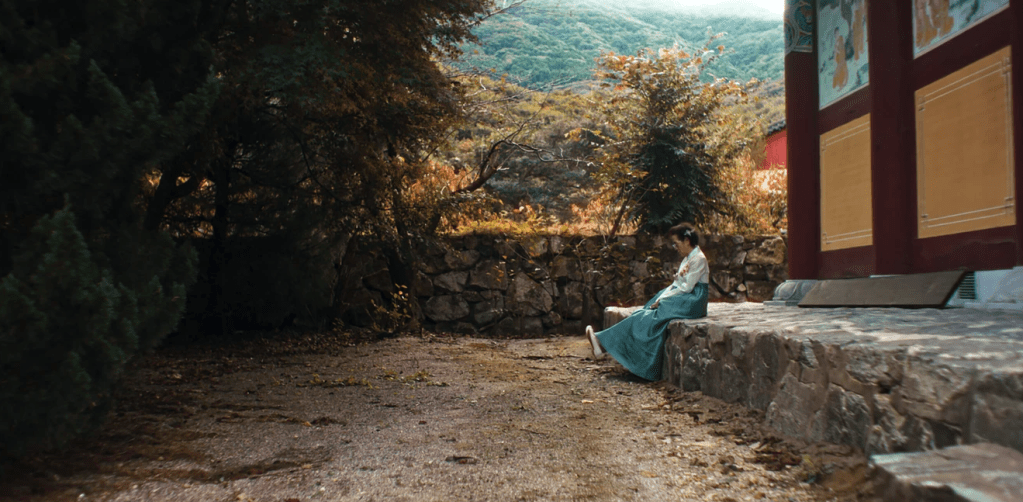
First Summer directed by HEO Gayoung
I saw a picture of your movie on the Cannes website – is this at the Temple?
H.G: Yes, it was. It’s the culture in Korea for parents and elders to wear a Hangbok at the weddings of their children. There are a lot of cultural references in the movie so I worried that only Koreans can understand the movie, but we’ll see.
What’s next now?
H.G: I’ve worked with movies for three years. I love movies, I’m addicted to shit-sandwiches (laugh), it’s very easy to be addicted. I am and I know it. I love making films so much but at the same time the movie industry is very harsh and unethical sometimes. Film making is always pushing people to the limit and we see how people changes in negative ways. I feel naked when I film because… in life I’m not naked and I don’t have to show myself vulnerable but in movies you have to. We fight, we attack each other…
I was so obsessed with my film, I was like a horse chasing a carrot, racing and racing. I need to find a way to film in my own way, without hurting people. Also without doing so much trash, there is so much waste in film making, it’s very unsustainable. I really wish to find a way to make films in a more positive way for the crew and for myself, because I want to enjoy what I love to do. Last year left me so many scars with filming First Summer.
How did your parents react?
H.G: Oh, they are happier than me. They’re really proud.
Thank you again for your time. When is your movie being screened at Cannes?
H.G: On Thursday 24th, 11 a.m. at the salle Buñuel.
Interview by Chapter 26


 Chapter 26
Leave a comment