
If I had to describe Jeju Island in three words: beaches, forests, and volcanos. Called the Hawaii of South Korea, it’s the most popular vacation destination of Koreans.
The Island is 70km long from west to east, and 30km long from north to south, which makes it ideal for a short road trip. The whole coastline is 260km long but the inland is also worth exploring.
The Korean friend I travelled with had previously explored the Island by bus, although I wouldn’t recommend it for a tourist short in time, as the busses does not pass very frequently.
Before I carry you along my road trip, let me dump some interesting facts you might like to know:
- Jeju Island is a self-governing region and the locals are indigenous to the island.
- The Island is covered in volcanic craters. The highest volcano is on the Mount Hallassan, at around 2000 meters of altitude.
- Jeju-Island is so popular that it was the busiest flight route in 2022 with 88.000 flights the whole year! When I was at the airport, I was shocked to see that there was a departure every 10 minutes, and they are apparently more than 200 flights a day from Seoul. The popularity of Jeju puts a big strain on its biodiversity.
- Mind the rain season.
- Local food specialities are flat fish, mandarine, peanuts and carrots (and several others!)
Day 1 – Forests, volcanos, and seaside
Our road trip begins on the east side of Jeju. We started our exploration in the early afternoon.
Our first stop was at a convenience store to purchase a plastic rain coat to protect us from the pouring rain.
The Bijarim Forest: the Forest of a Thousand Years
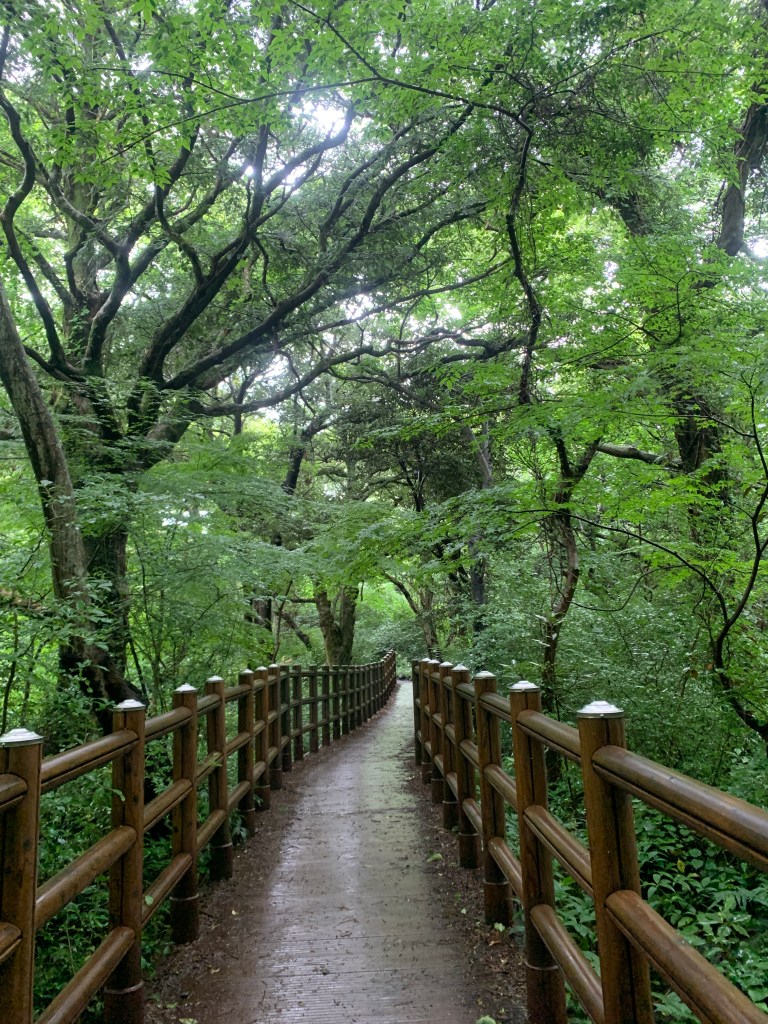
This forest is so old and dense, it feels a bit magical walking through it. The rain made the atmosphere and the smell of the tree amazing and eerie. Perfect moment to practice mindfulness.
It’s called the forest of a Thousand Years as the trees are very old. At some point you’ll reach the Millennium Nutmeg, an 813 years old tree. Turning around it three times should bring you abundance and prosperity.
Darangswi Oreum – Volcanic cone

A short drive from the forest, we attempted to hike this crater. It took around 30-45 minutes to reach the top, and the hike was mostly made of stairs and seagrass path. Sadly, the weather turned windy and foggy, and I didn’t get to see the top.
A walk on the coast and flat fish noodles

There is not much to see in this area but there was restaurant I really liked where we ate cold flat fish noodles and sashimi. Before dinner, we took a stroll along the area and I spotted a lovely bar with a sea-view and an open terrasse.
Day 2 – Craters, boat tours and bike rides
Still exploring the east coast, we drove along the scenic north-east coastline down to Seongsan Ilchulbong.
Seongsan Ilchulbong (and its beach, and its female divers)
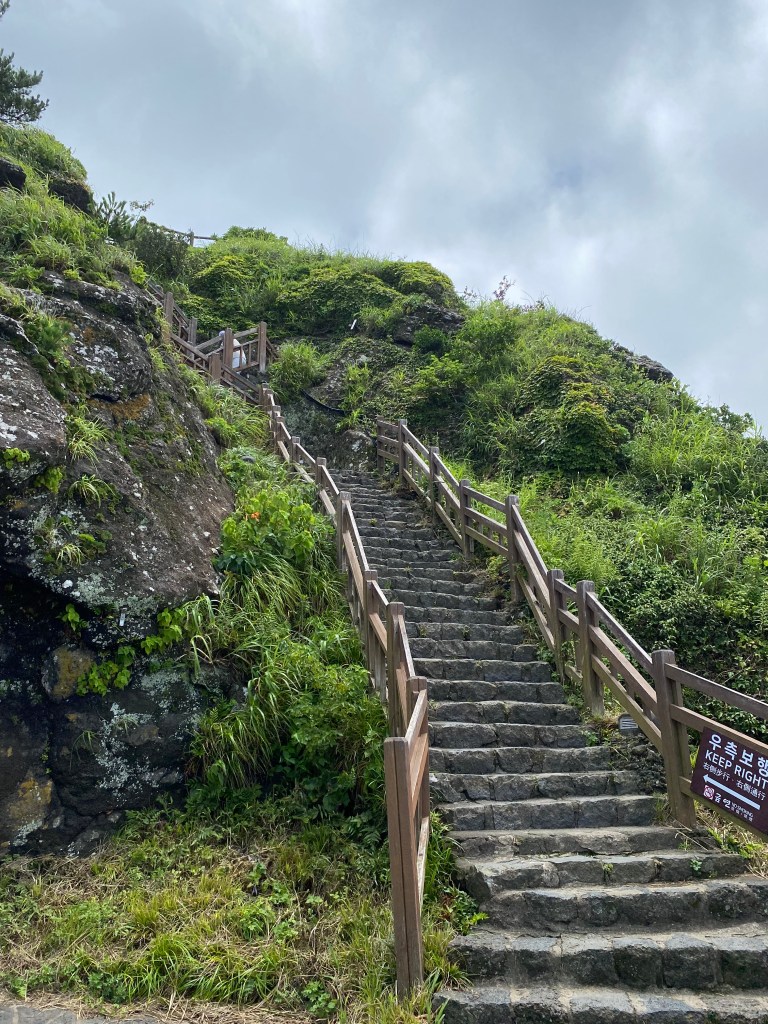
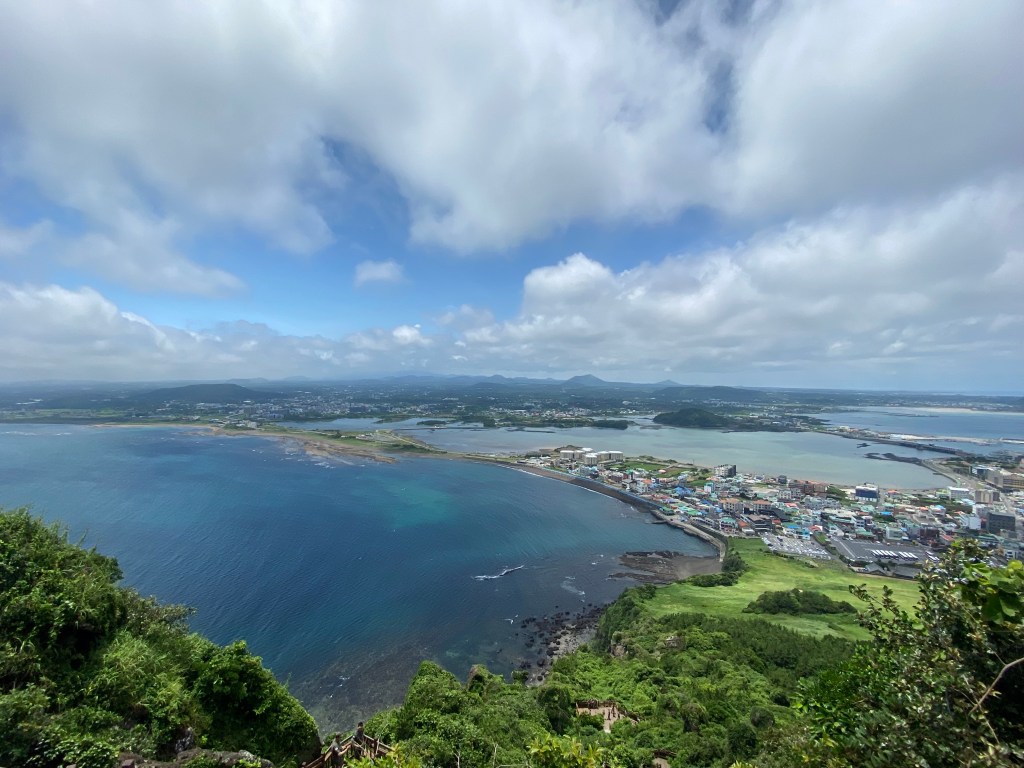
Seongsan Ilchulbong is a large coastal mountain with a crater on the top. The 25-40 minutes hike to the top is made of stairs but not too demanding, in my opinion. The parking lot is nearby restaurants and coffee places. The view over the area and the crater is really worth the climb.
However, my favourite place of all I’ve seen in South Korea is actually on the beach nearby the mountain. If you keep walking down after finishing the hike, along the coast, you’ll shortly reach stairs that enable you to go down at sea level, on a beautiful beach. There, you’ll have an impressive view over Seongsan Ilchulbong. You’ll be able to walk on the sand, enjoy the sea, put your sore feet in the water, and look at the fishes. If you’re lucky, you’ll get to see some female divers of Jeju.
You must know about the female divers of Jeju, because it’s simply such a beautiful and inspiring part of the island’s history. I’m obliged to say a bit about them!
The Haenyeo (sea women) are women that dives to harvest seafood, and they are a symbol of matriarchy, independence, and strength. This practice has existed since the first century, but females outnumbured men around the 17th century (allegedly due to wars). Girls start diving at 11 years old and can fully become Haenyeo after 7 years of diving, when they can reach deeper levels. Still today, there are 80 years old Haenyeo. Before the existence of wet suits, they would stay in the water for an hour in the winter, warm themselves to a fire, and dive back for another hour. In the summer they would dive for around four hours. Today, the wet suit have extended their harvest time to around 6 hours.
A large part of families’ income came from the female divers and hence, Jeju’s society is marked by matriarchy. Gender roles got reversed and men would take care of the children and pay dowry to the bride. Thanks Wikipedia.
I adored learning about this part of history and I got the chance to see them dive on that beach. They sung a prayer for the sea to protect them and bring them back safely. I helped one carry a basket filled with sea food and it was incredibly heavy.
There is no precise location on google map but you can pinpoint this seafood restaurant to find your way. You can also have a 20 minutes boat ride along the rock, which I highly recommend, it’s one of my favourite memories.
Bike tour around Udo
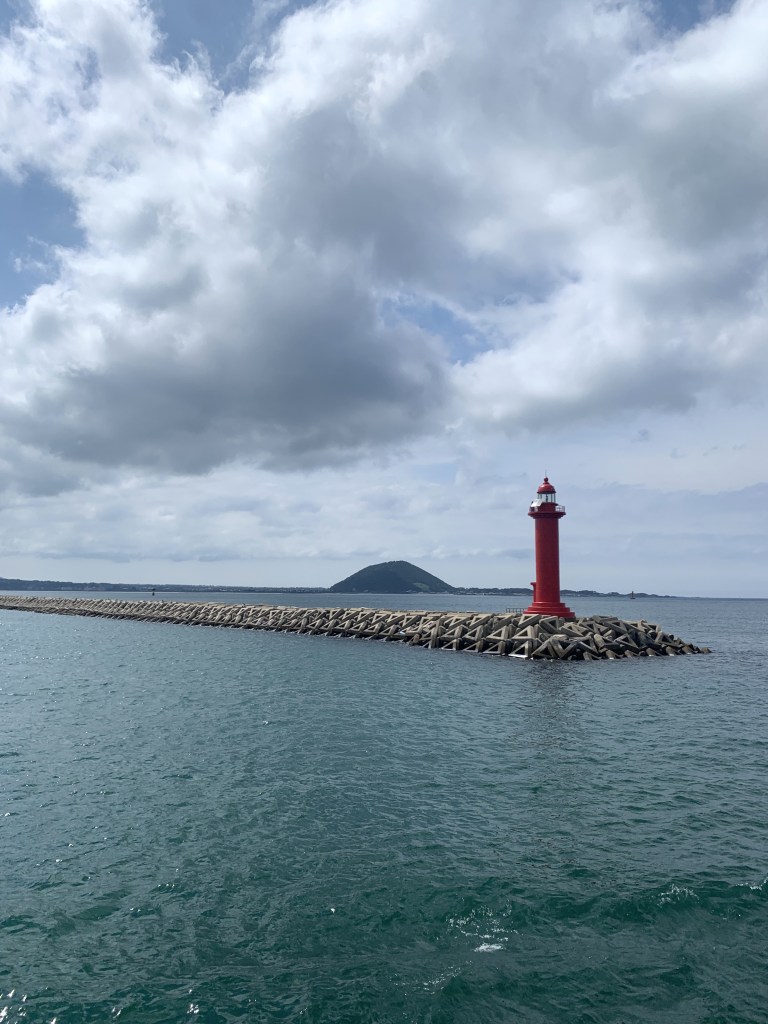
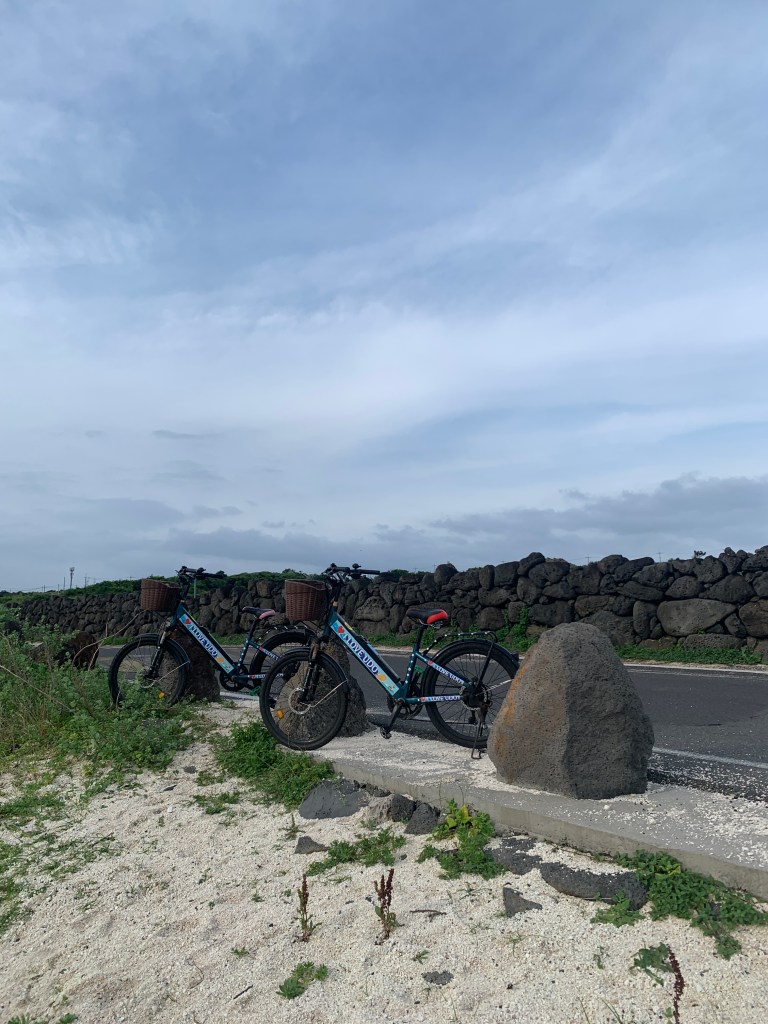
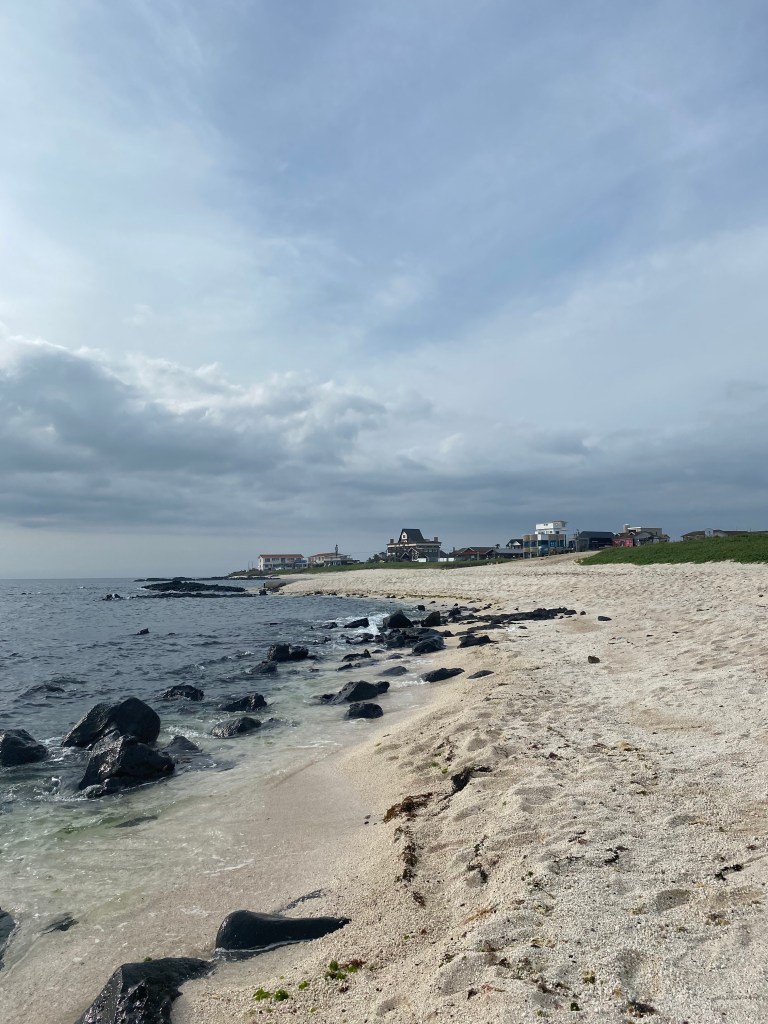
My friend really wanted to show me this island that she loves, so we headed to the nearby harbour and took a 20 minutes ferry ride to Udo, a very small island (only 7 km2) nearby Seongsan Ilchulbong. Around 1700 people lives there.
We rented electric bikes (but you can also rent scooters or mini-cars) and went for a ride around the island.
Along the way you’ll get to see lighthouses, cliffs, and countless coffee shops. Our tour ended with Seobinbaeska, a short beach of white sand a black volcanic rocks. This beach is renown to be the special spot my friend shared a romantic moment with a local, but you will not find this precious peace of information in any travel sites.
Day 3 – Waterfalls and dragons
On day 3, we bade farewell to the east and headed south.
Jeongbangpokpo Falls

Our first stop was the Jeongbangpokpo Falls, one of the most recommended natural site in Jeju. The waterfall is only a few stairs down and the water flows directly in the sea. A local legend tells the story of the spirit of a dragon that used to live underneath the waterfall.
Cheonjeyeonpokpo Falls
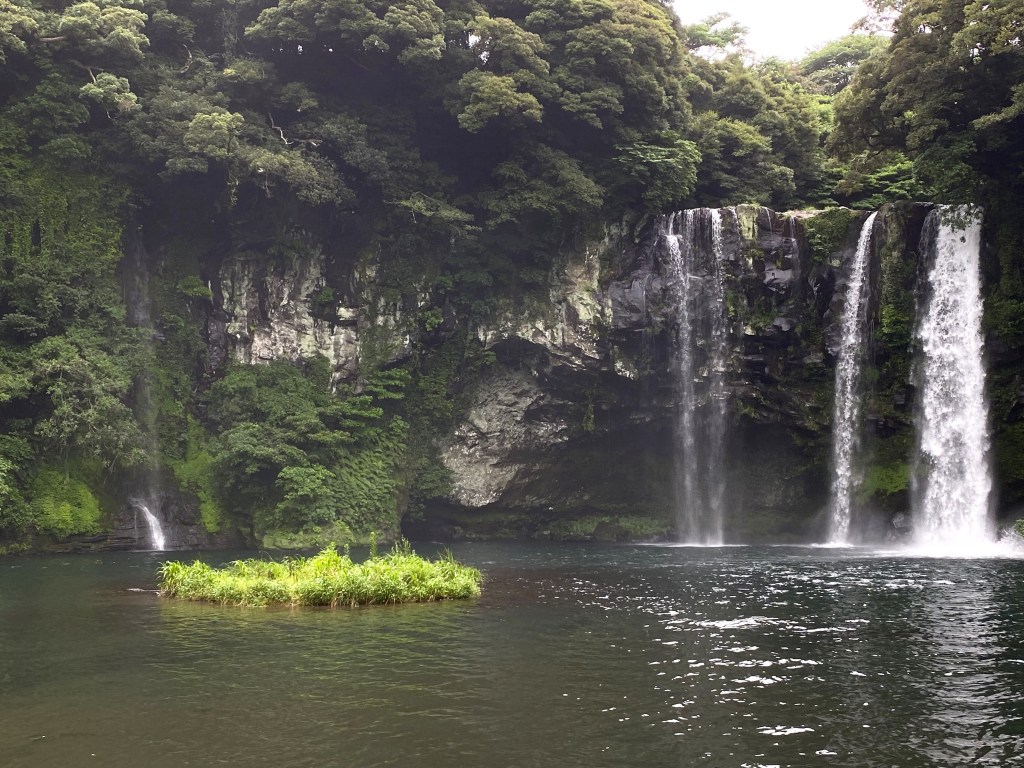

We then headed to Cheonjeyeonpokpo Falls. To reach this waterfall, you actually have to walk through a beautiful park that I adored! You long a water stream surrounded by trees. The park is rich in folkloric stories that you get to read along the way. You get to enjoy the smell of the trees, look at the kai fish in the stream, cross a bridge and touch a magic dragon pearl before you see this beautiful waterfall. The falls are apparently illuminated at night.
Songaksan Viewpoint
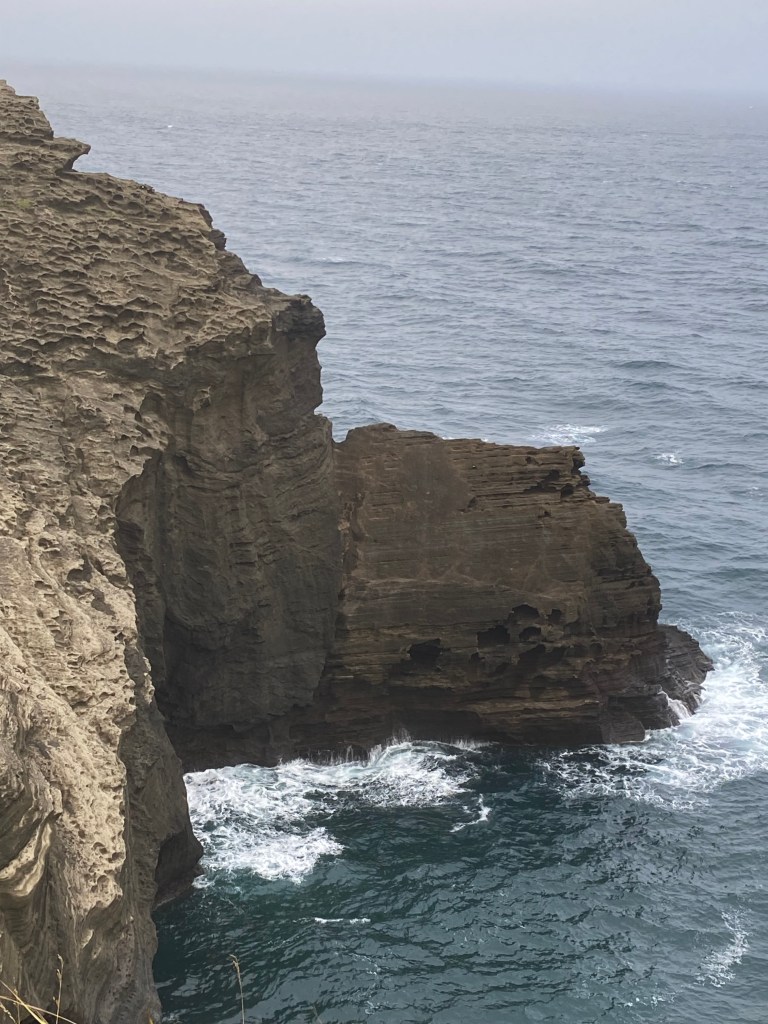

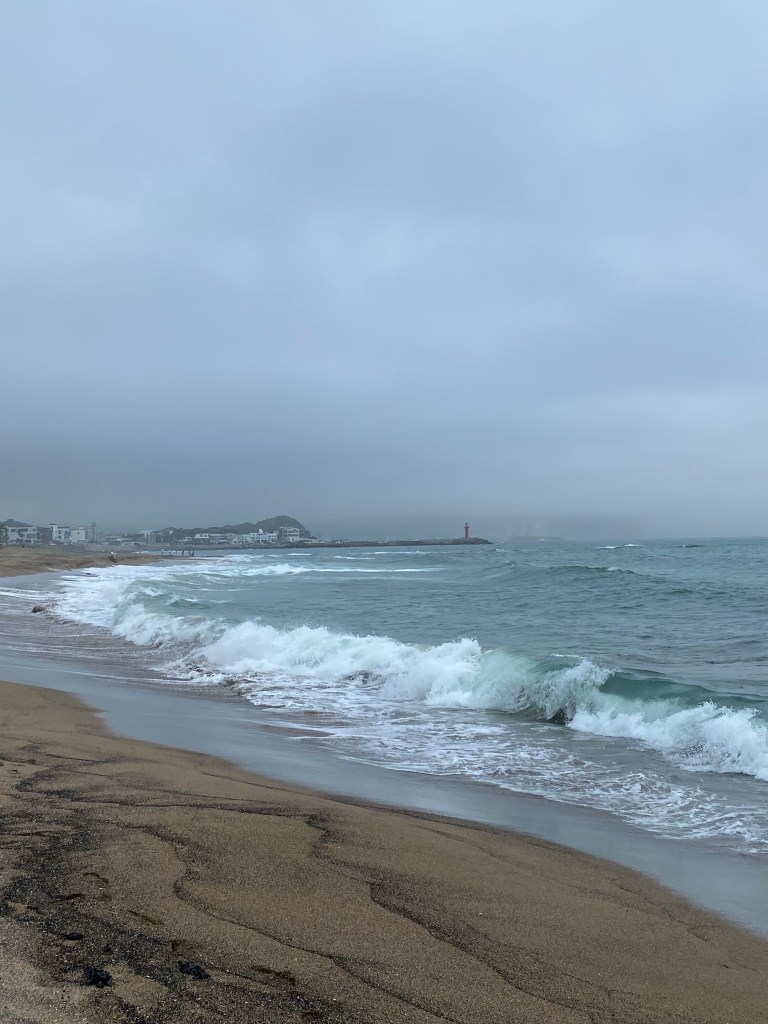
We drove to the most extreme point of the south coast to enjoy a walk along Songaksan. We first took a stroll on the nearby beach, and then drove nearer to the walk along the Cape. The place is marked by green landscapes, black stone coast, and Japanese occupation history.
This is along that walk that my friend told me about dark tourism. The site is marked by Japanese occupation as man-made caves along the coast were made to store explosives.
Day 4 – What to do if it rains
On day 4, we went North. It rained a lot and our plane was in the late afternoon. Hence we settled for museums and activities nearby the airport (in case shit hits the fan you know).
Arte Museum Jeju
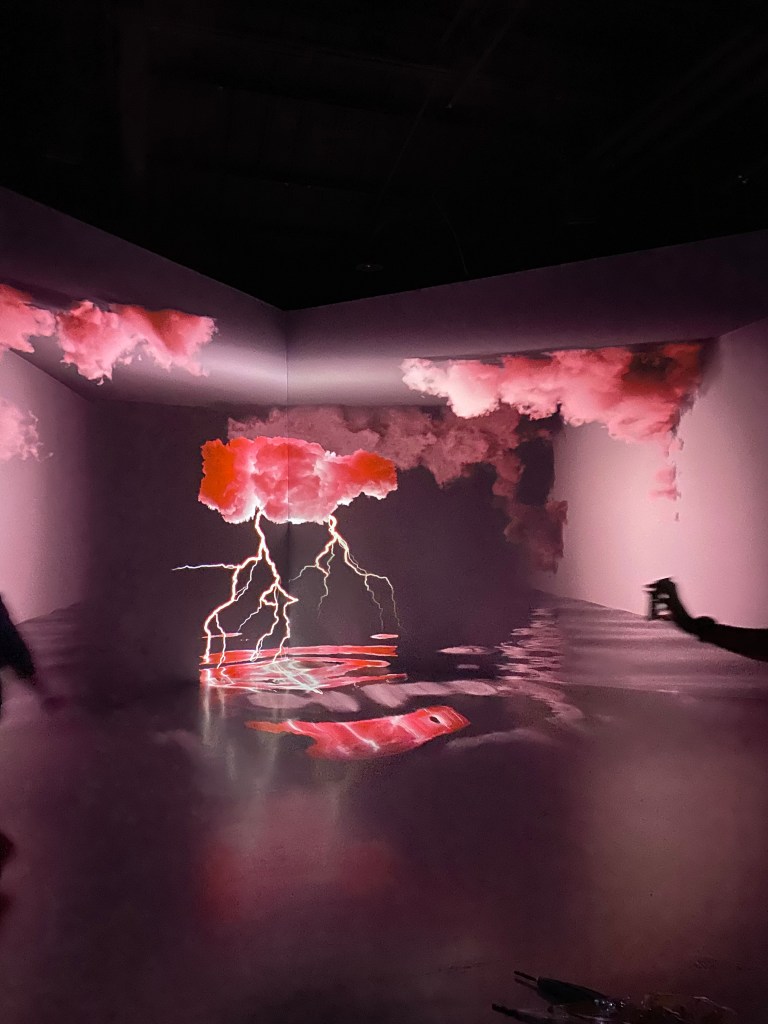

It was pouring that day so we had to find a nice museum to seek shelter in. We hesitated between Jeju National Museum, Jeju Folklore and Natural History, Jeju Museum of Art, and the Museum of Sex and Health, which we were really intrigued by. There are so many museums in Jeju it’s a good alternative if it rains.
We settled on the Arte Museum Jeju. It’s a museum where art is projected to the walls, and some rooms are dedicated to optic illusions. I enjoyed the lights and optical effects, but the visit was quite short for the price and gave us a bit of sensory overload due to the crowd and the darkness.
Yongduam Rock
As we wanted to stay in the area, we went to explore the shore near the airport. I went on a walk and randomly stumbled upon the Yongduam Rock which is famous for its ressemblance to a dragon head.
Yongyeon Pond
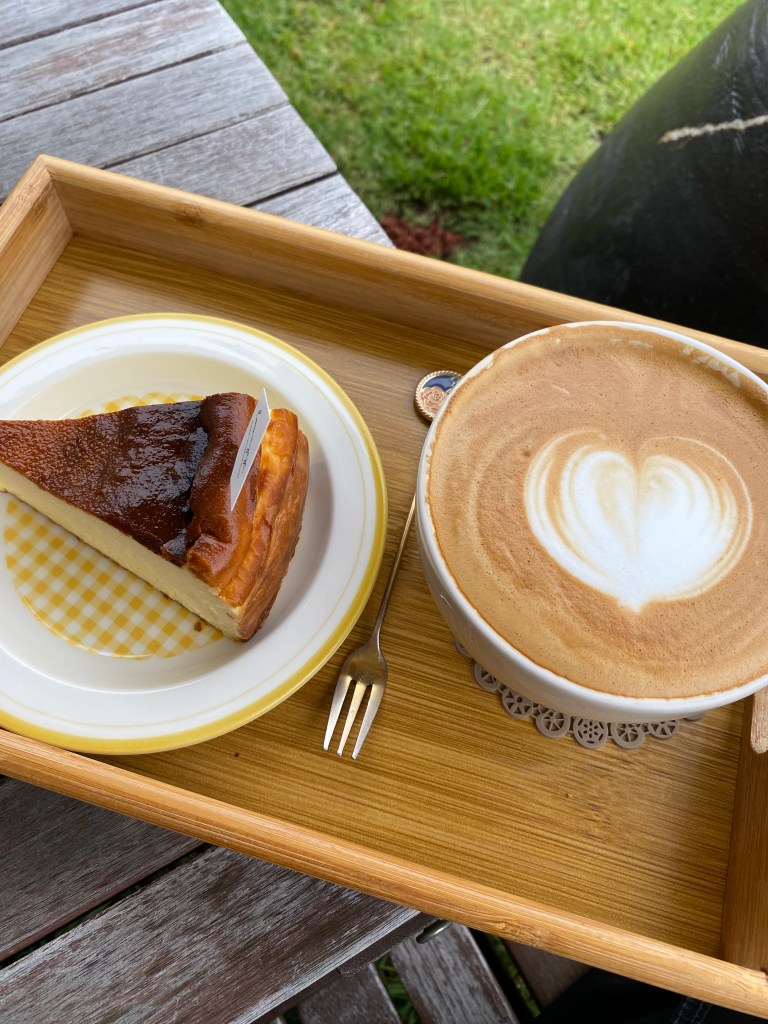


A few steps away from the Yongduam Rock is this lovely spot where a water stream join the sea, crossing a red bridge.
And I got a wonderful coffee shop for you: Yongsodam. The atmosphere is calm, and peaceful, both inside and in the garden where you can enjoy your break.
I ended up walking all the way to start of the airport’s runway for a bit of plane spoting.
I adored Jeju Island. I wish I had gotten more time to explore more forests, fit some museums in the schedule, or do some hikes. I also wished I could have experienced it like the Hawaii of Korea and sunbath on the beaches. Truly a contrasting experience after visiting Seoul.
Wish I had seen:
Hike Mount Hallasan
Walk to the Suwolbong Peak Summit
Visit Hyeopjae Beach and Gwaki Beach
Visit one of the several forest
Chapter 26




 Chapter 26
Leave a comment